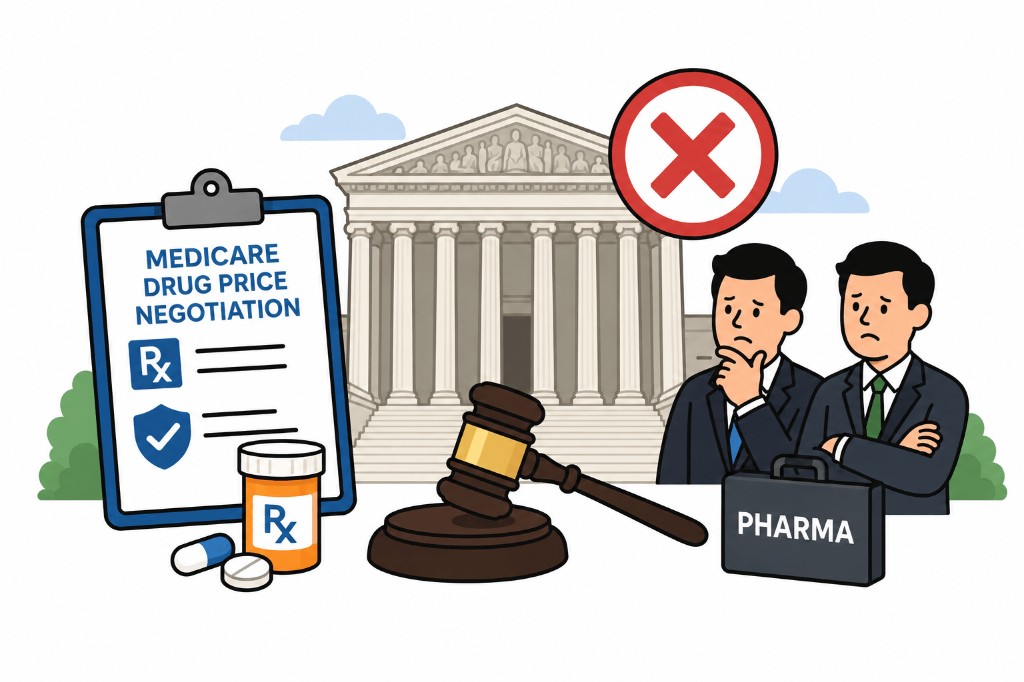
The U.S. Supreme Court declined on May 18, 2026 to hear appeals from several major pharmaceutical companies challenging Medicare's drug price negotiation program. The decision left in place lower-court rulings that rejected legal attacks on the program created under the Inflation Reduction Act.
The first negotiated prices for 10 Medicare drugs took effect in 2026, and the program is expected to continue expanding unless Congress changes the law.
Patient advocates focused on prescription affordability should treat this as a major legal checkpoint. The decision does not end all policy fights over drug pricing, but it preserves federal authority to negotiate prices for selected high-spend Medicare drugs.
What advocates should watch
Track whether negotiated prices translate into lower out-of-pocket costs, whether Part D plans change formulary design in ways that limit access, and how the program affects people who rely on drugs for diabetes, heart failure, inflammatory disease, cancer, and other serious conditions.
Related: Reuters report, CMS selected drugs and negotiated prices.
What Part D enrollees should do
Negotiated prices phase in by drug and year. Confirm whether a client's medication is on the negotiation list, compare plan formularies during open enrollment, and appeal if a plan places a negotiated drug on a high tier without required cost-sharing limits.
Keep EOBs showing coinsurance spikes that may reflect formulary changes rather than negotiation savings.
Guides on patientadvocates.io
For step-by-step help, start with our Medicare Part D basics guide or browse related topics including Rx affordability, Denied prescriptions.